
What Would Disqualify You From Donating a Kidney: Key Medical and Eligibility Factors
Kidney donation is one of the most meaningful medical contributions a person can make, offering individuals with kidney failure a chance at renewed life. Modern transplantation medicine has made the process safer and more successful than ever before, but strict eligibility criteria still exist to ensure both donor safety and recipient success. One of the most frequently researched concerns among potential donors is what would disqualify you from donating a kidney, as people want to understand whether they meet the necessary requirements before proceeding with medical evaluation.
Kidney donation involves careful screening, including physical examinations, blood tests, imaging studies, and psychological assessments. These steps are designed to protect the donor’s long-term health while ensuring that the donated kidney will function properly in the recipient’s body. Because the procedure removes one of two kidneys from a healthy individual, medical professionals must be extremely cautious in determining suitability.
The decision to donate is deeply personal and often motivated by compassion for a loved one or a desire to help strangers in need. However, not everyone qualifies, and medical guidelines are strict to prevent complications. Understanding what would disqualify you from donating a kidney helps individuals make informed decisions early in the process and avoid unnecessary emotional or medical strain.
Kidney donation is generally safe for healthy individuals, but certain health conditions, lifestyle factors, and medical histories can prevent someone from being approved. These restrictions exist to protect both the donor and the recipient, ensuring the transplant process is as successful as possible.
Medical Conditions That Affect Eligibility
One of the most significant factors in determining eligibility for kidney donation is the presence of chronic medical conditions. Diseases such as uncontrolled diabetes, high blood pressure, or chronic kidney disease can disqualify potential donors due to increased risk of complications.
In many cases, physicians carefully evaluate whether these conditions are well-managed. However, when conditions are severe or poorly controlled, they pose significant risks to both short-term surgical outcomes and long-term kidney function. This is why understanding what would disqualify you from donating a kidney is essential before beginning the evaluation process.
Heart disease is another major consideration. Individuals with a history of heart attacks, congestive heart failure, or serious cardiovascular conditions may not be eligible due to surgical risks. The stress of surgery combined with reduced kidney function can place additional strain on the cardiovascular system.
Chronic infections such as hepatitis B, hepatitis C, or HIV may also affect eligibility. These conditions can increase the risk of transmission to the recipient and complicate post-surgical recovery. In some cases, advancements in medical treatment may allow exceptions, but strict evaluation is always required.
Infectious Diseases and Health Risks
Infectious diseases play a critical role in determining donor eligibility. Medical professionals must ensure that no transmissible diseases are passed to the recipient during transplantation. As a result, individuals with certain infections may be disqualified. what felonies disqualify you from getting a passport
When evaluating what would disqualify you from donating a kidney, doctors carefully review a donor’s medical history, travel history, and exposure risks. Conditions such as active tuberculosis, untreated viral infections, or recurring bacterial infections can pose significant risks.
Even past infections may require careful evaluation. For example, individuals who previously had hepatitis may still be considered in some cases if they have fully recovered and show no signs of active disease. However, this depends on detailed laboratory testing and specialist consultation.
Fungal and parasitic infections are also considered during screening. These conditions may not always be obvious but can become serious complications after surgery. Ensuring a donor is completely healthy is essential for successful transplant outcomes.
Medical teams use advanced diagnostic tools to detect hidden infections and ensure that donors are safe. This thorough screening process is one of the reasons why kidney donation has become increasingly safe over time.
Lifestyle Factors and Personal Habits
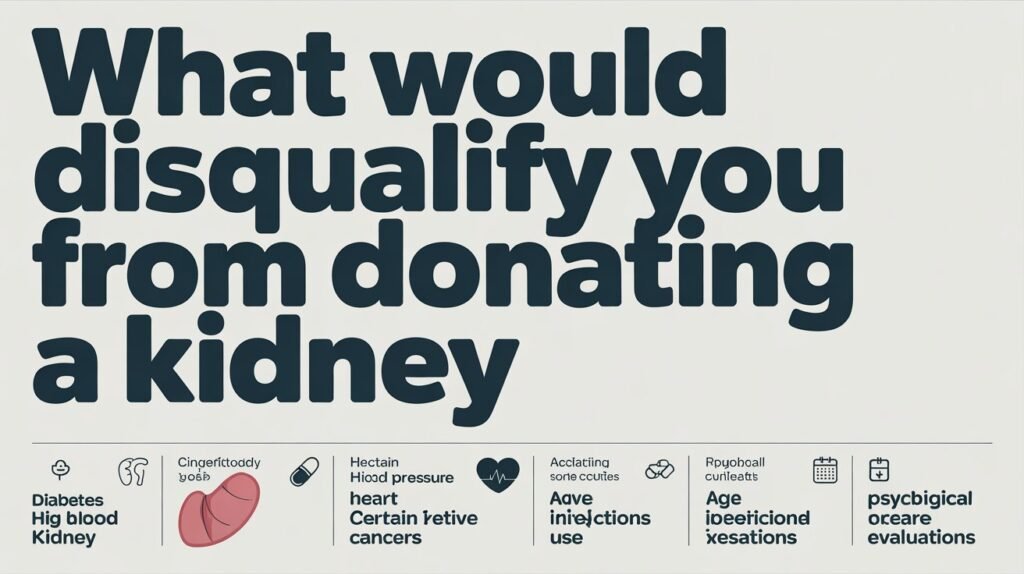
Lifestyle choices can significantly influence kidney donation eligibility. Habits such as smoking, excessive alcohol consumption, or drug use may affect kidney health and overall surgical risk.
Understanding what would disqualify you from donating a kidney often includes evaluating long-term lifestyle patterns. For example, individuals with a history of substance abuse may need to demonstrate sustained recovery before being considered eligible.
Smoking is another important factor. While not always an automatic disqualification, smoking increases the risk of complications during surgery and recovery. Many transplant programs require donors to quit smoking before proceeding.
Obesity can also affect eligibility, as it is associated with increased surgical risks and long-term health complications. Doctors often recommend weight management programs before approving candidates.
Physical activity levels and general fitness are also considered. Healthy lifestyle habits improve surgical outcomes and reduce recovery time. Maintaining a balanced diet and regular exercise routine can positively influence eligibility decisions.
Cardiovascular Health Considerations
The cardiovascular system plays a vital role in determining whether a person can safely donate a kidney. Since surgery places stress on the body, individuals with heart-related conditions must be carefully evaluated.
Doctors assessing what would disqualify you from donating a kidney pay close attention to blood pressure levels, cholesterol readings, and heart function tests. Uncontrolled hypertension is one of the most common reasons for disqualification.
Even individuals with mild heart conditions may need further testing before approval. Stress tests, echocardiograms, and other diagnostic tools help determine whether the heart can safely handle surgery.
Good cardiovascular health is essential not only for surgery but also for long-term kidney function. After donation, the remaining kidney must compensate for the loss of the other, making overall health stability crucial.
Patients with a history of stroke or vascular disease may also face additional restrictions. These conditions can increase the risk of complications during and after the procedure.
Mental and Psychological Evaluation
Psychological well-being is an important part of the kidney donation process. Donors must be mentally prepared for the emotional and physical aspects of surgery.
When considering what would disqualify you from donating a kidney, mental health conditions such as severe depression, untreated anxiety disorders, or cognitive impairments may be evaluated carefully. The goal is not to exclude individuals unnecessarily but to ensure informed and voluntary decision-making.
Psychological assessments help determine whether donors fully understand the risks and long-term implications of donation. Emotional stability is essential for recovery and post-surgical adjustment.
In some cases, individuals may be temporarily deferred rather than permanently disqualified. With proper treatment and counseling, they may become eligible in the future.
Support systems, including family and community support, are also considered during evaluation. A strong support network can significantly improve recovery outcomes.
Age and Physical Requirements
Age is another factor that influences eligibility, although there is no strict universal limit. Most transplant centers prefer adult donors who are fully developed physically and emotionally.
Evaluating what would disqualify you from donating a kidney includes assessing whether the donor’s body can safely undergo surgery and maintain long-term kidney function. Very young individuals are typically not considered due to ongoing physical development.
Older adults may also face additional screening requirements. While age alone is not always a disqualifying factor, age-related health conditions can influence eligibility.
Body mass index and overall physical condition are also important considerations. Doctors assess whether the donor’s body can tolerate surgery and recover effectively.
Medical teams focus on long-term health outcomes, ensuring that donors can continue to live healthy lives with one kidney.
Kidney Function and Medical Testing

Kidney function tests are a central part of the evaluation process. These tests measure how effectively the kidneys filter waste and maintain fluid balance in the body.
Doctors determining what would disqualify you from donating a kidney rely heavily on blood and urine tests to assess kidney performance. Any signs of reduced kidney function may lead to disqualification.
Imaging studies such as ultrasounds or CT scans are also used to examine kidney structure. These tests help identify abnormalities such as cysts, stones, or structural irregularities.
A healthy donor must have two fully functioning kidneys before donation. After surgery, the remaining kidney must be capable of maintaining normal body function.
Repeated testing is often required to confirm consistent kidney health over time. This ensures accuracy and reduces the risk of medical complications.
Surgical Risks and Medical Safety
Every surgical procedure carries some level of risk, and kidney donation is no exception. Although modern surgery techniques are highly advanced, careful evaluation is still required.
Understanding what would disqualify you from donating a kidney includes recognizing conditions that increase surgical risk, such as bleeding disorders or severe allergies to anesthesia.
Medical teams carefully review patient history to identify potential complications. Preoperative assessments help reduce risks and ensure safe procedures.
Recovery time varies depending on individual health conditions, but most donors recover fully within weeks. Proper post-operative care is essential for long-term health.
Hospitals prioritize donor safety above all else, ensuring that every step of the process is carefully monitored and controlled.
Final Evaluation and Decision Process
The final stage of kidney donation involves a comprehensive review of all medical, psychological, and lifestyle factors. A multidisciplinary team evaluates whether the donor is suitable for surgery.
At this stage, understanding what would disqualify you from donating a kidney becomes especially important, as all previous assessments are considered together.
The decision is made carefully to ensure both donor safety and transplant success. Even small risks are taken seriously to avoid long-term complications.
Once approved, donors receive detailed instructions about preparation, surgery, and recovery. Those who are not approved are often provided with explanations and recommendations for future eligibility.
The evaluation process reflects the medical community’s commitment to ethical standards, safety, and patient care. Kidney donation remains a life-saving act that requires careful consideration and responsibility.
Conclusion
Kidney donation is a remarkable act of generosity that can transform lives, but it requires thorough medical evaluation and careful screening. Many factors influence eligibility, including medical conditions, lifestyle habits, psychological readiness, and overall physical health.
Throughout the process, professionals carefully assess risks to ensure donor safety and transplant success. Individuals exploring donation must understand the criteria involved and seek proper medical guidance.
By learning about what would disqualify you from donating a kidney, potential donors can better prepare for evaluation and make informed decisions about whether they are suitable candidates for this life-changing procedure.